I have tested plenty of kitchen storage fixes, and the ones that survive daily use are usually the simplest. My own bright little townhouse kitchen has limited drawer space, so I focus on systems that stay useful instead of pretty setups that collapse after a month.
This guide covers the drawer layouts I would actually use, from cutlery zones to deep cookware storage. I look at how organization fails because a drawer that photographs well but wastes time is not a solution.
Use Adjustable Drawer Dividers for Flexible Storage
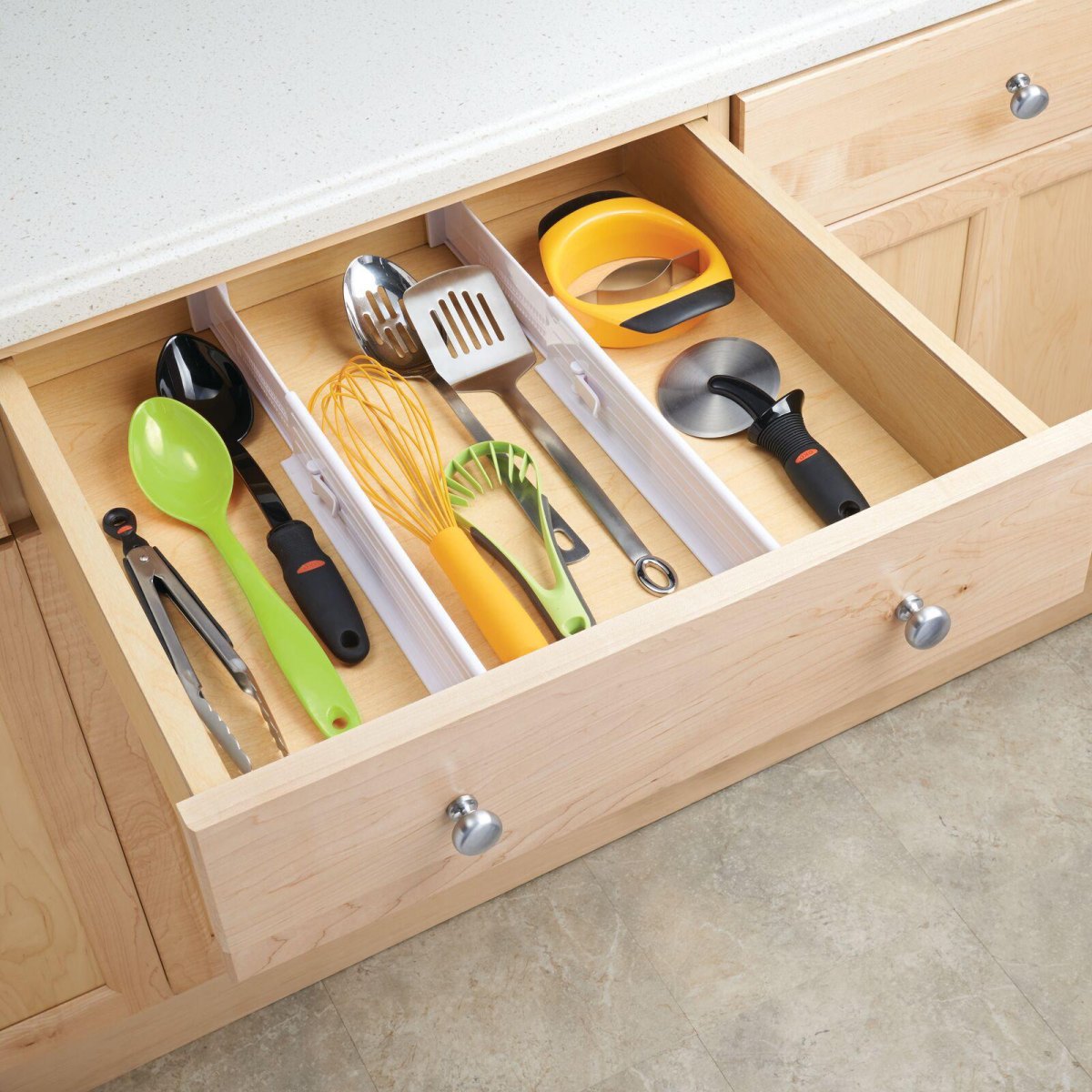
I like adjustable dividers because they adapt when your habits change. A rigid tray can become useless when you buy a new utensil, while movable drawer sections keep working longer.
The failure point I watch for is cheap plastic that bows under pressure. Measure first and choose sturdy adjustable inserts that lock firmly.
Create a Dedicated Cutlery Drawer System
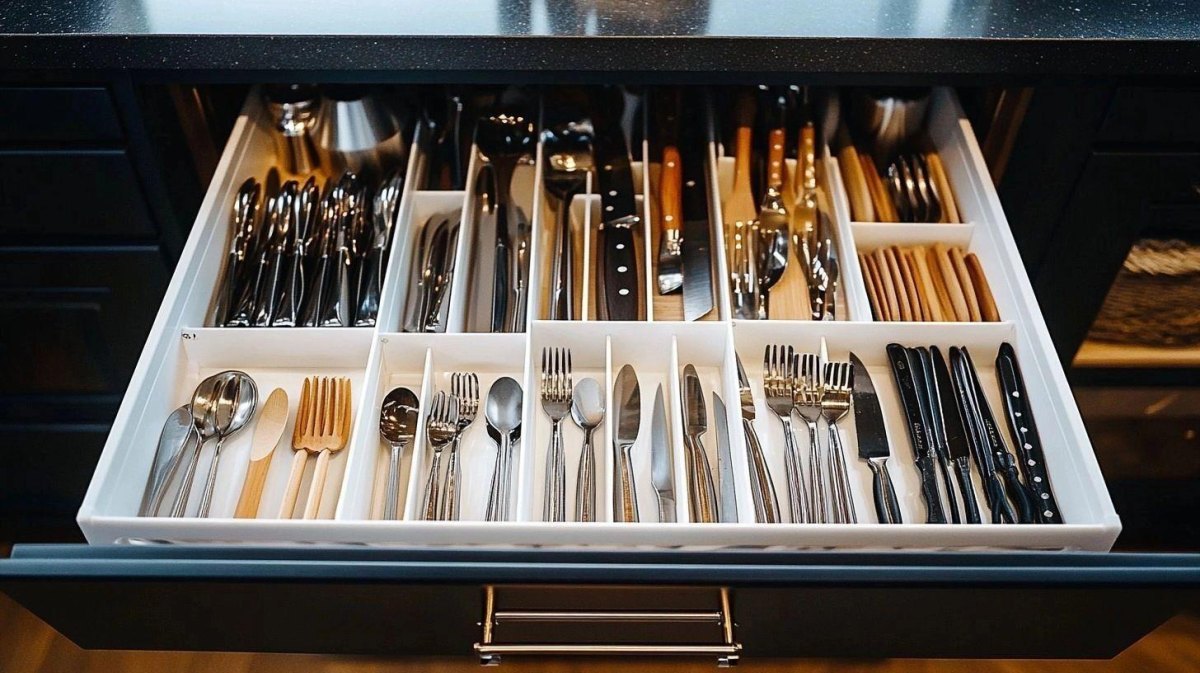
A cutlery drawer should have one job: making forks, knives, and spoons easy to grab. I prefer separate utensil compartments because mixed piles waste time.
In my experience, the biggest mistake is buying a tray before checking measurements. A good system starts with the drawer dimensions, not the product listing.
Organize Cooking Tools by Frequency of Use
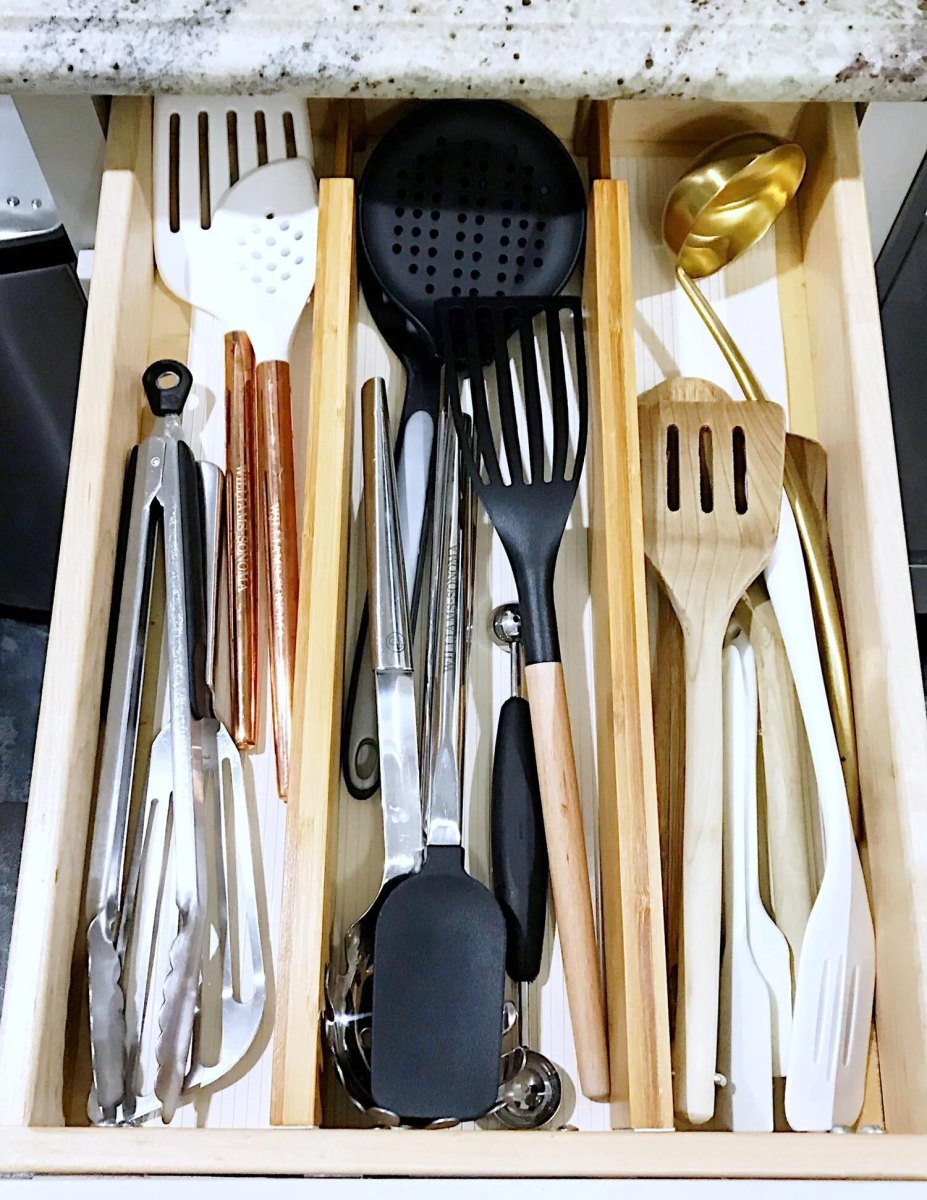
I arrange spatulas, whisks, and spoons based on how often I reach for them. The front area belongs to daily cooking tools, not the gadgets I forgot I owned.
This approach saves space because it removes the temptation to keep every tool visible. Usage-based zones beat random sorting every time.
Add Knife Storage Inserts for Safety and Space
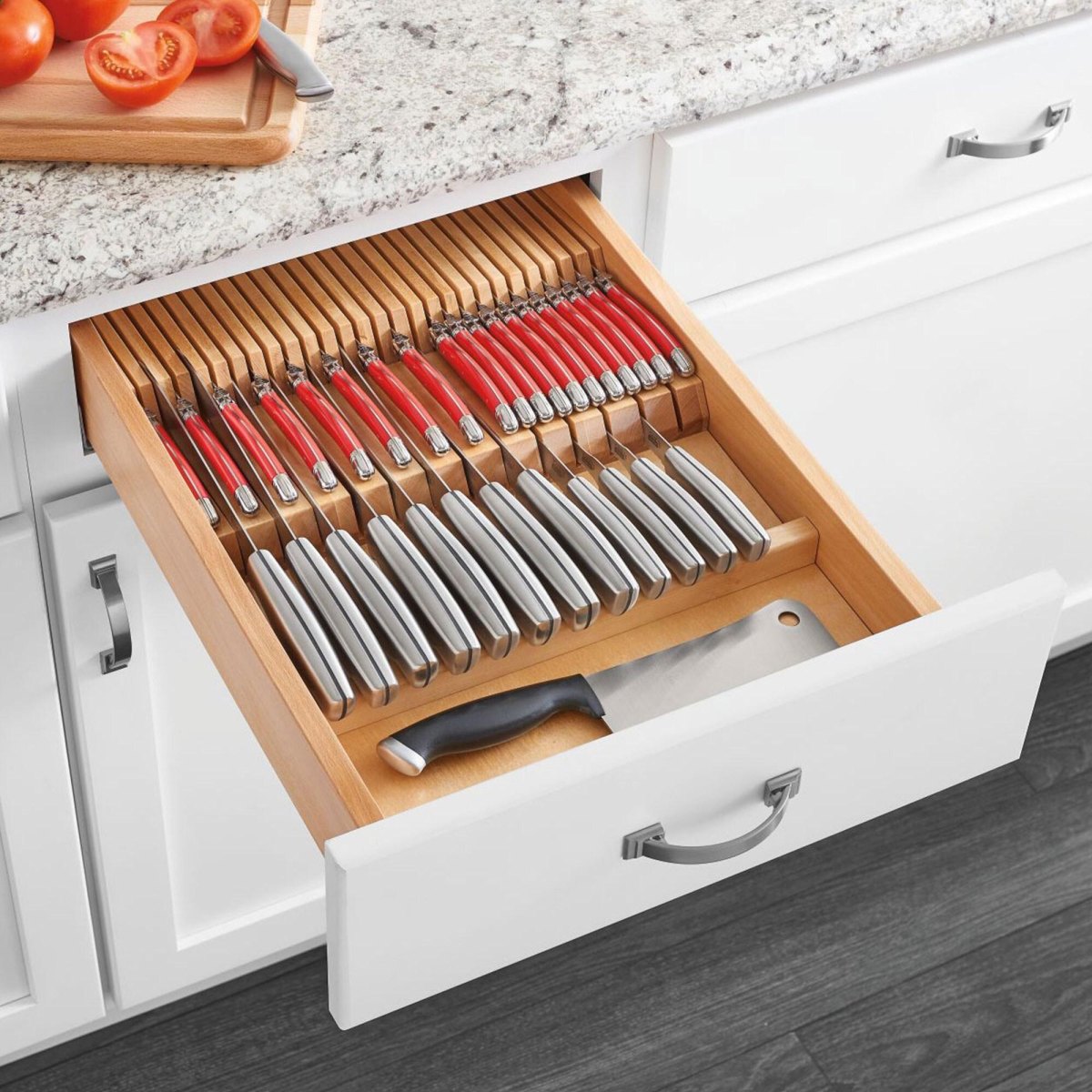
I prefer drawer knife inserts over loose blade storage because they prevent dangerous searching. A proper insert gives each knife a protected slot.
The common failure is an insert that fits poorly and shifts around. Check for secure blade spacing before buying.
Arrange Spice Jars in a Drawer Rack
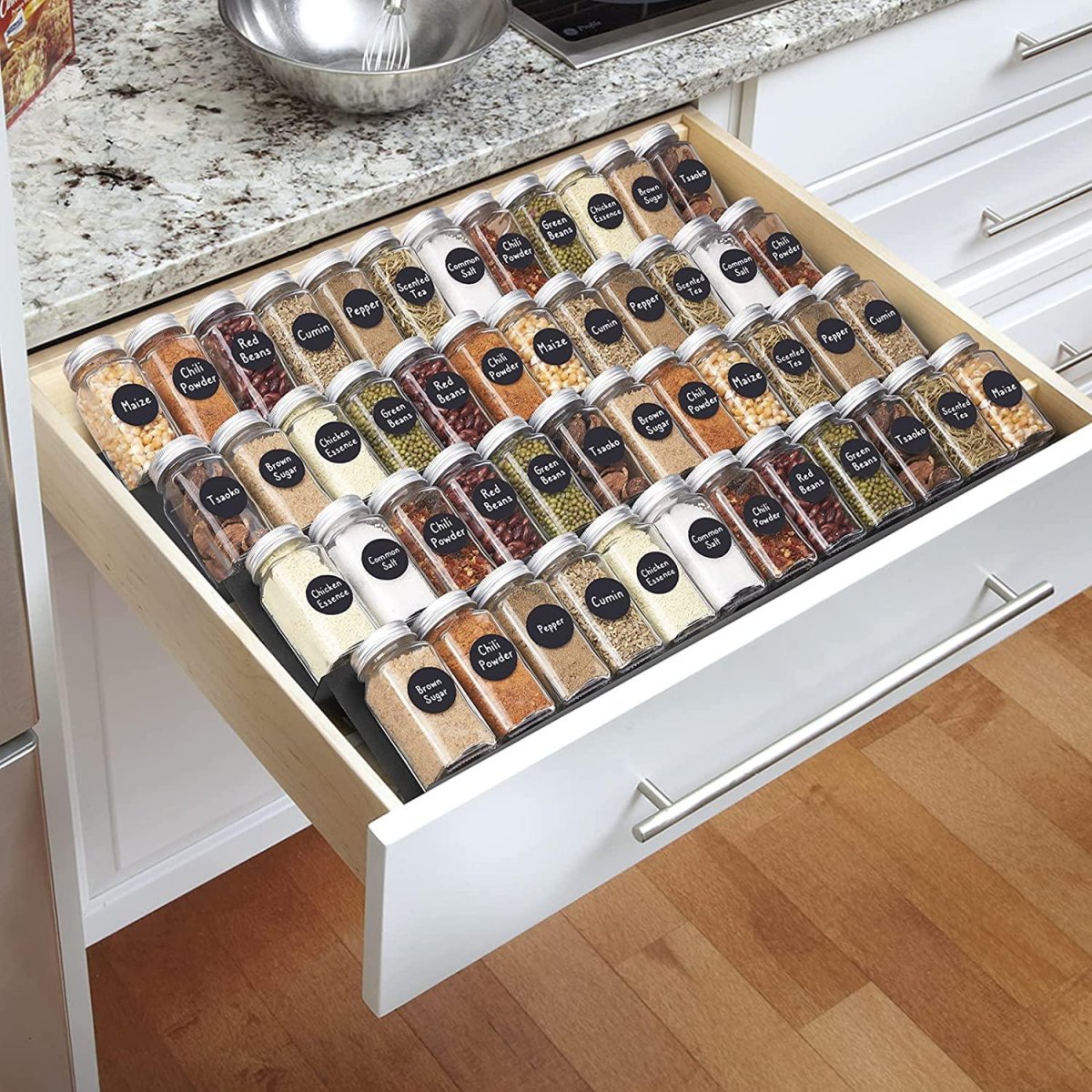
A spice drawer works best when every label can be seen without lifting jars. I prefer tiered spice organizers because hidden spices often become expired spices.
The main maintenance issue is overfilling. Keep only what you use and create a visible spice system.
Store Baking Supplies in a Dedicated Drawer
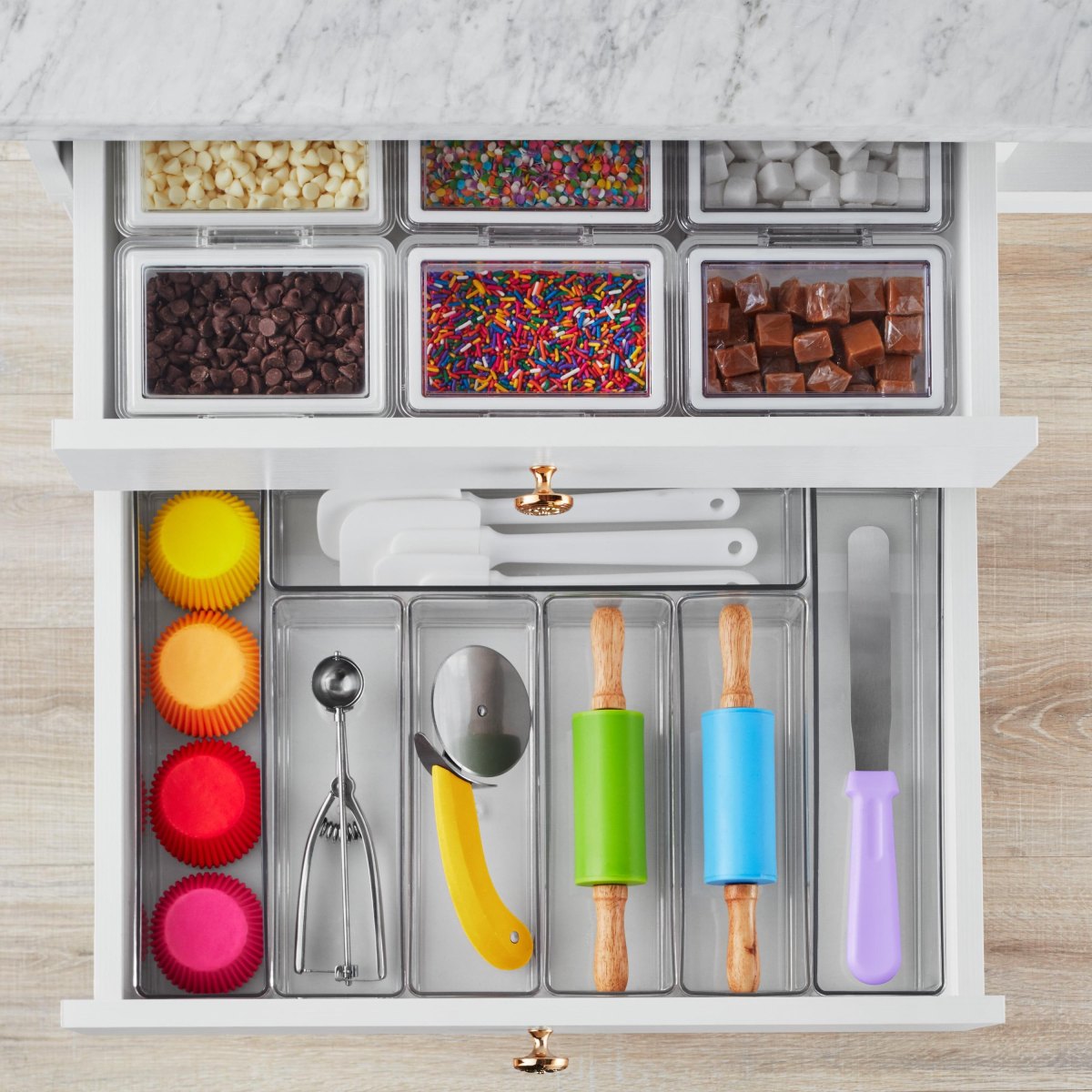
I like giving baking tools their own drawer because measuring cups and accessories tend to scatter. A dedicated area creates a faster baking setup.
Store the items you actually use and avoid buying organizers for every small item. Simple grouping works better than complicated storage.
Use Drawer Bins for Small Kitchen Accessories
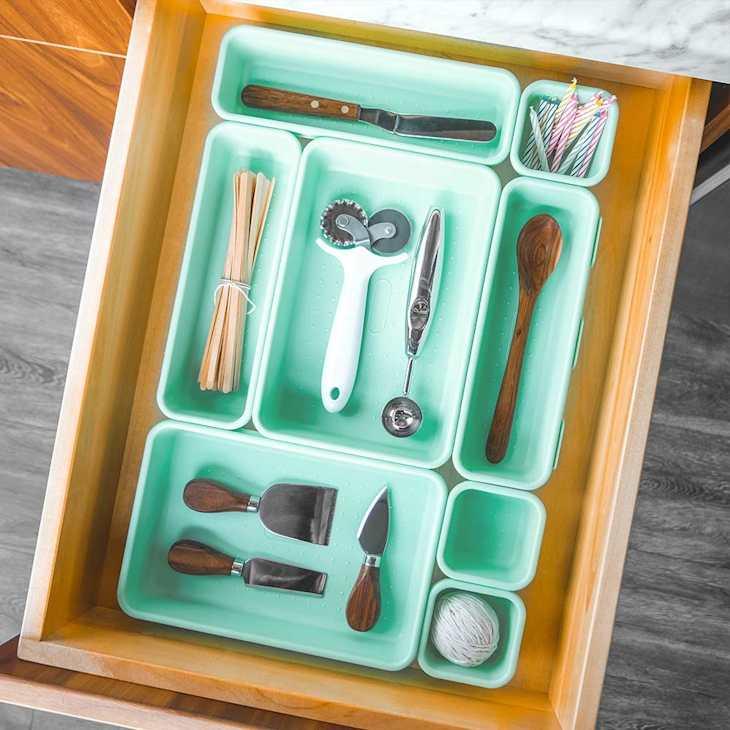
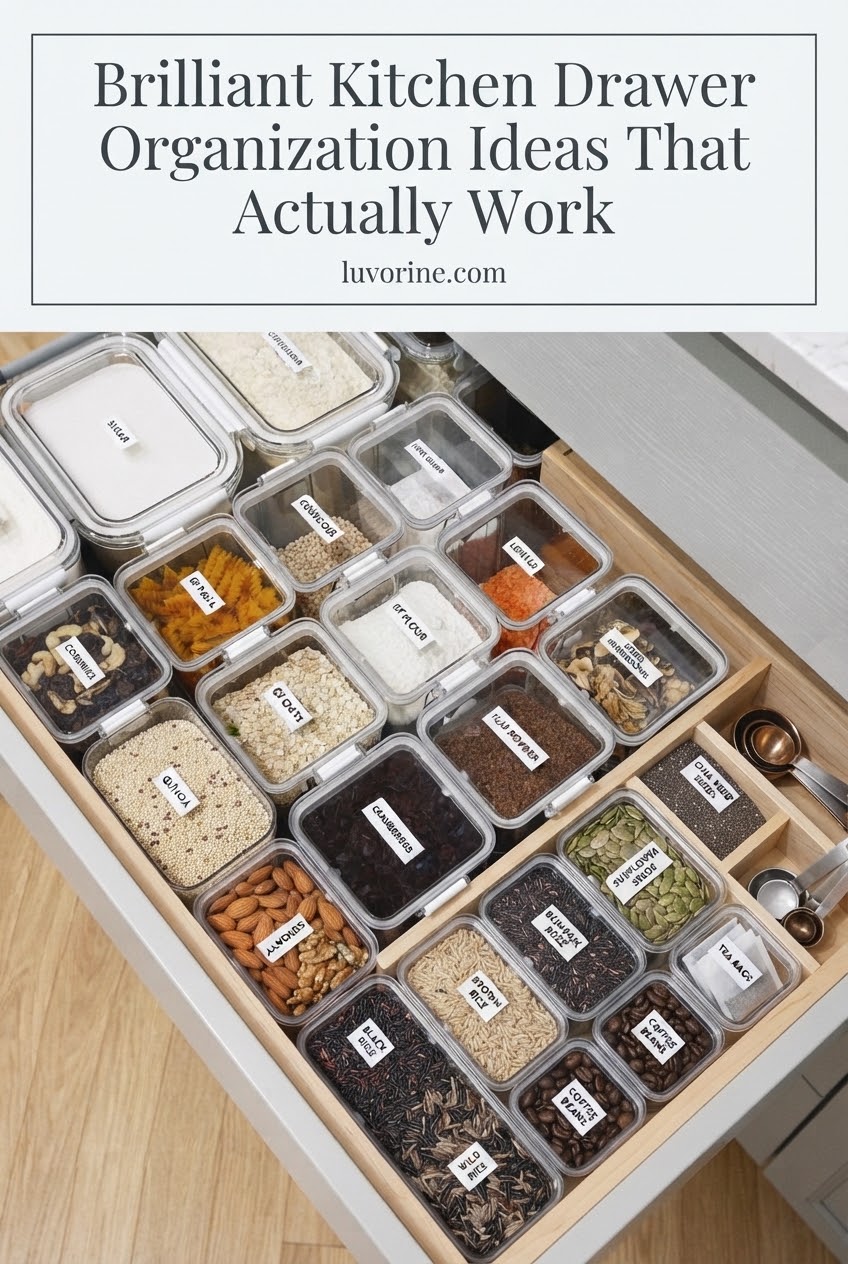
Small accessories like peelers, clips, and measuring spoons disappear quickly without boundaries. I use small drawer bins to stop clutter from moving around.
The trick is avoiding too many containers. Too many bins create another problem: storage without purpose.
Create a Neat Junk Drawer with Compartments
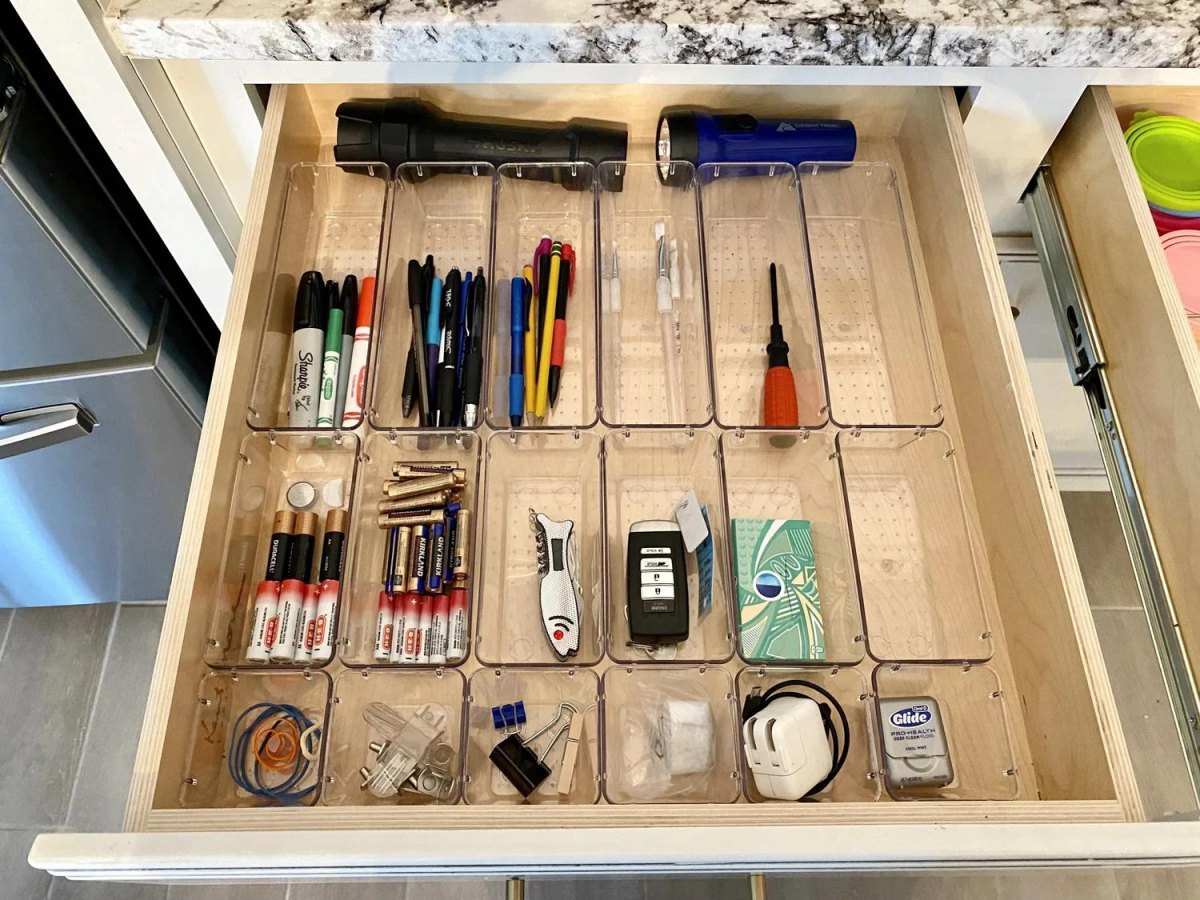
Every kitchen needs a catchall drawer, but mine has limits. I divide it into small practical categories instead of letting it become a mystery box.
The biggest failure is storing duplicates. A quick seasonal review keeps the junk drawer manageable.
Organize Food Storage Containers and Lids
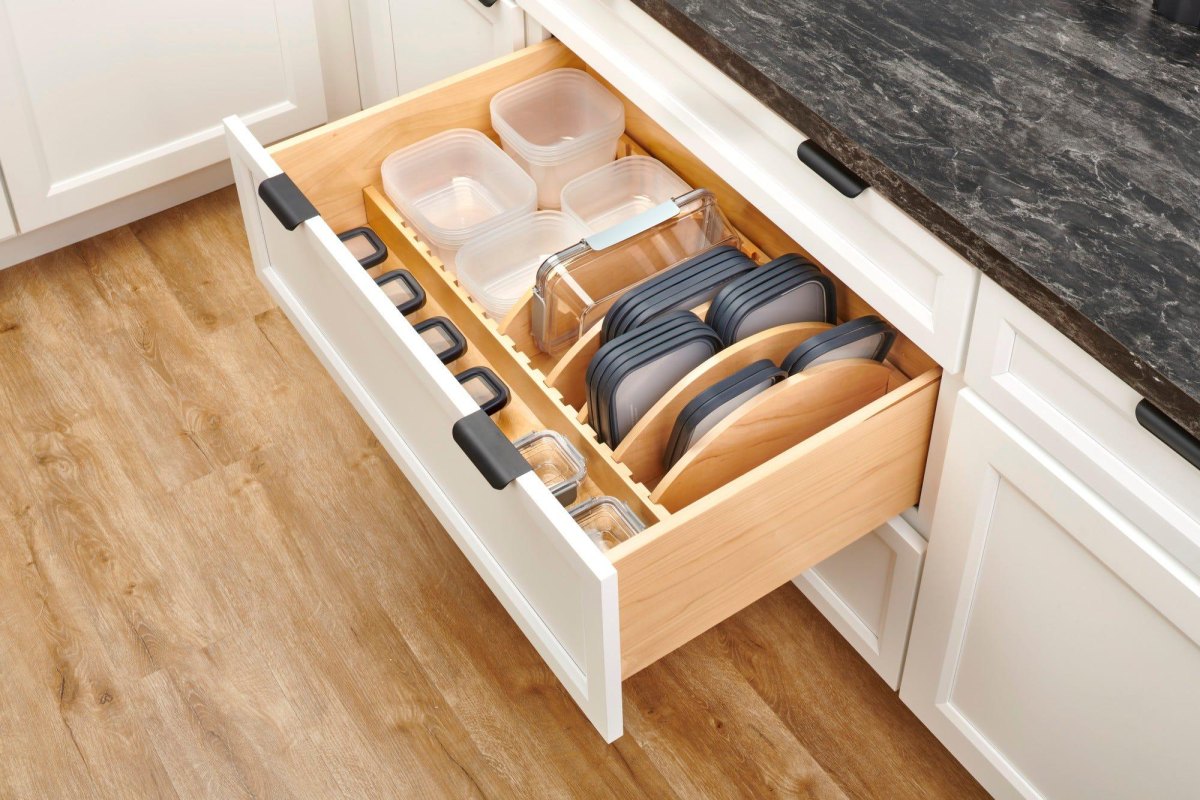
Food containers are one of the fastest ways for drawers to become chaotic. I store lids separately or vertically for easier matching.
The failure point is keeping containers without partners. A regular check removes unused storage pieces.
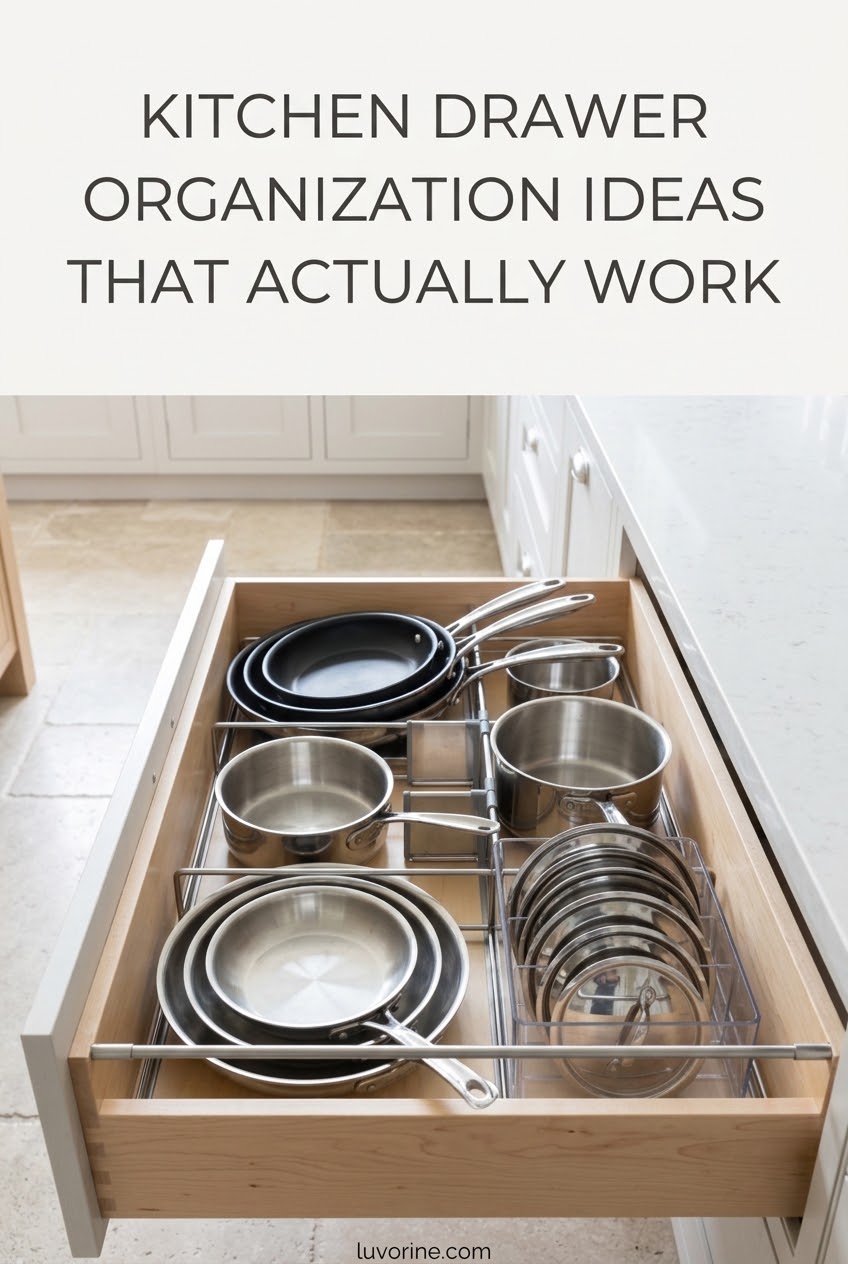
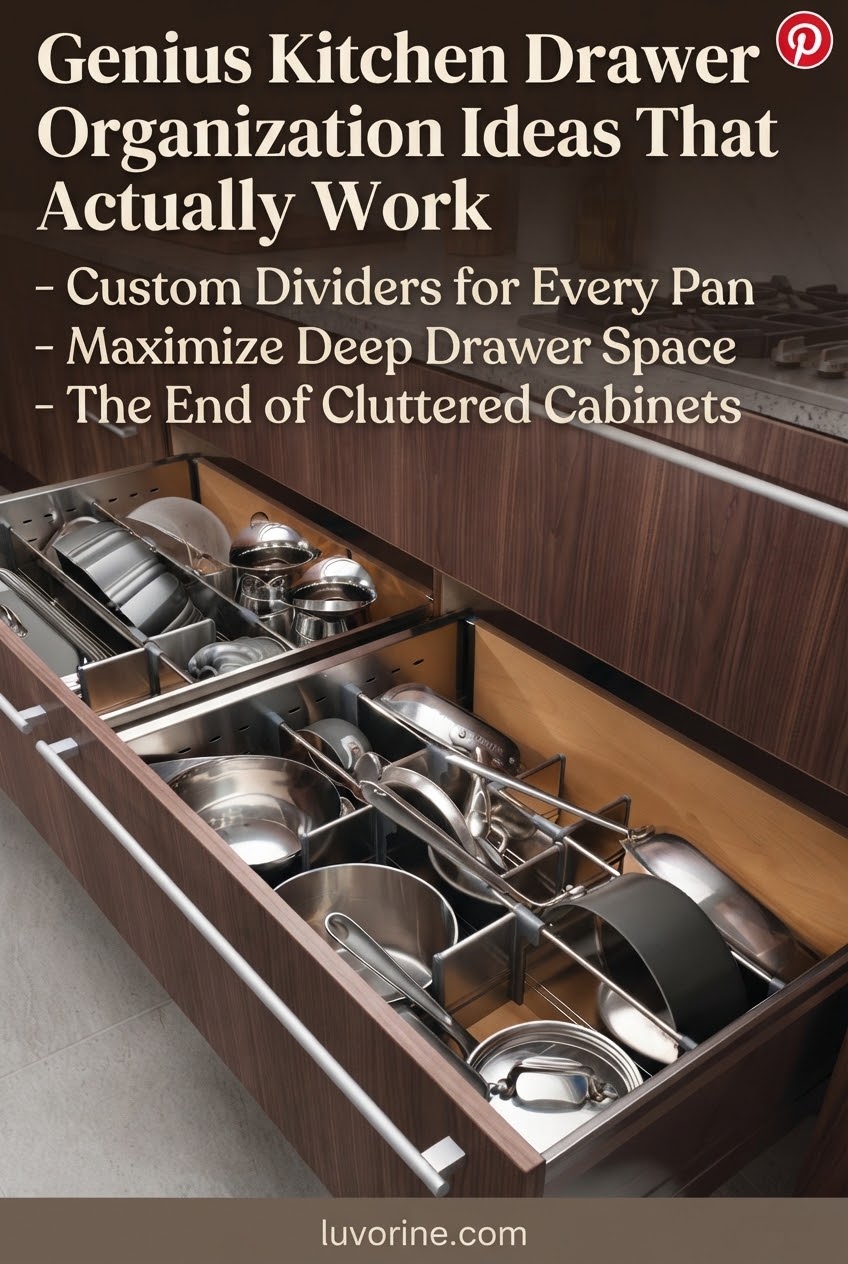
Install Deep Drawer Storage for Pots and Pans
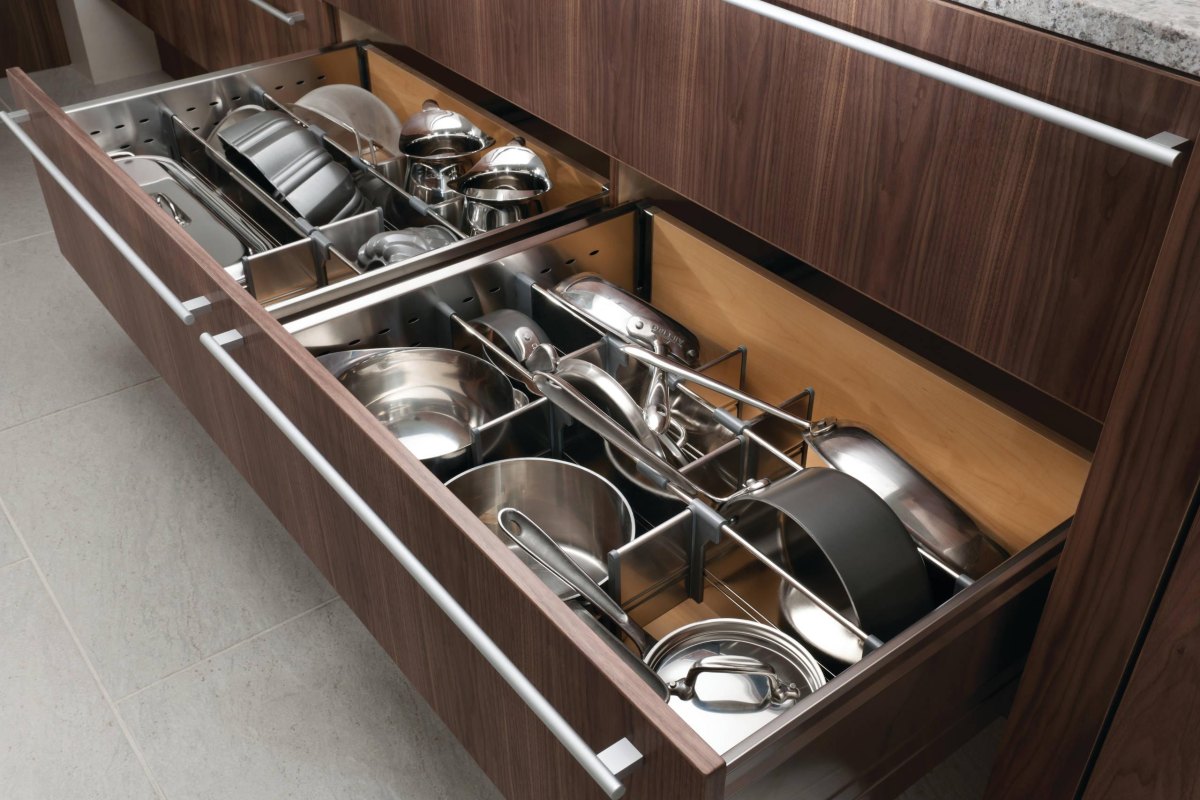
Deep drawers are excellent for cookware when they have structure. I use dividers so pans stand separately and create clear cookware access.
The weak point is overloading drawer hardware. Heavy items need proper weight support and careful placement.
Arrange Kitchen Towels with Folded Drawer Storage
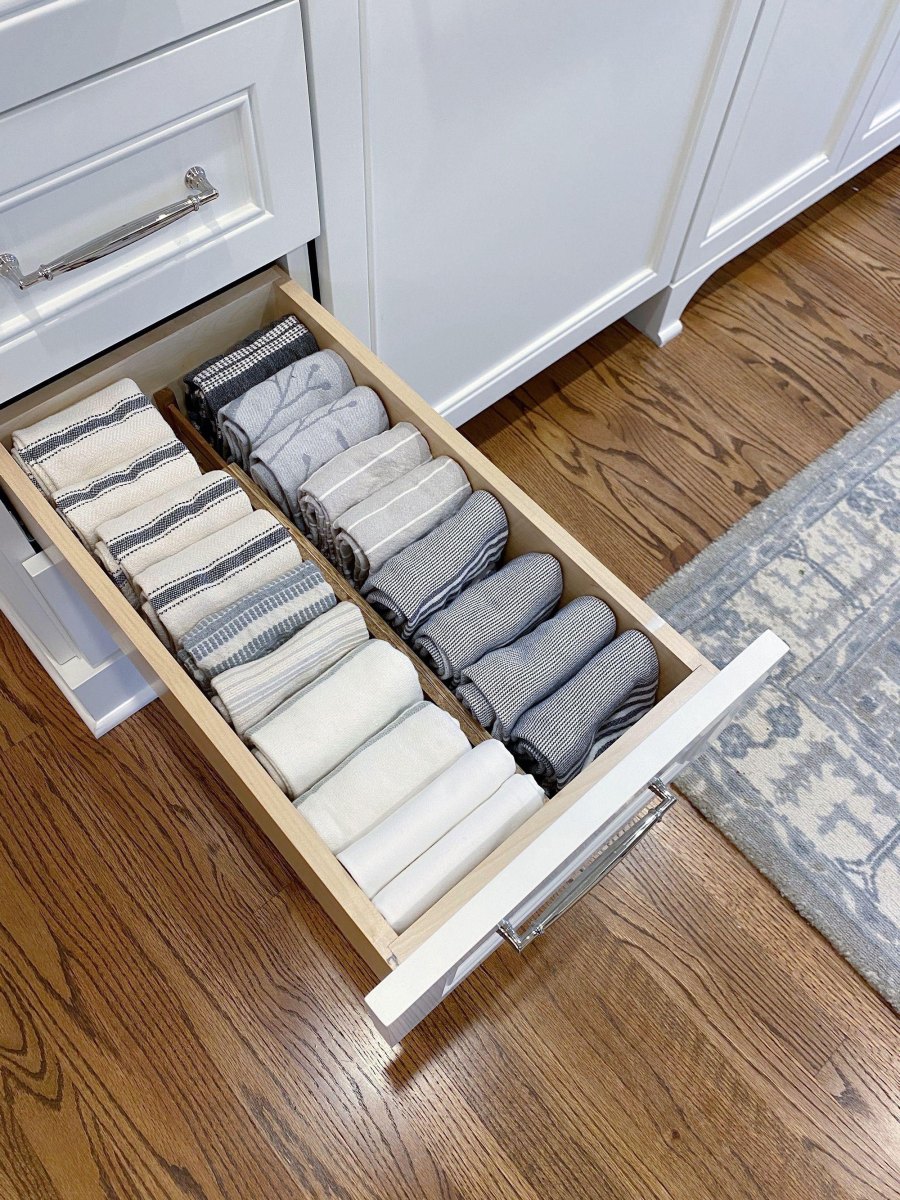
I keep kitchen towels folded by type because searching through a pile is unnecessary. A simple system creates quick towel access.
The biggest issue is overcrowding. Leave space so folded stacks stay stable.
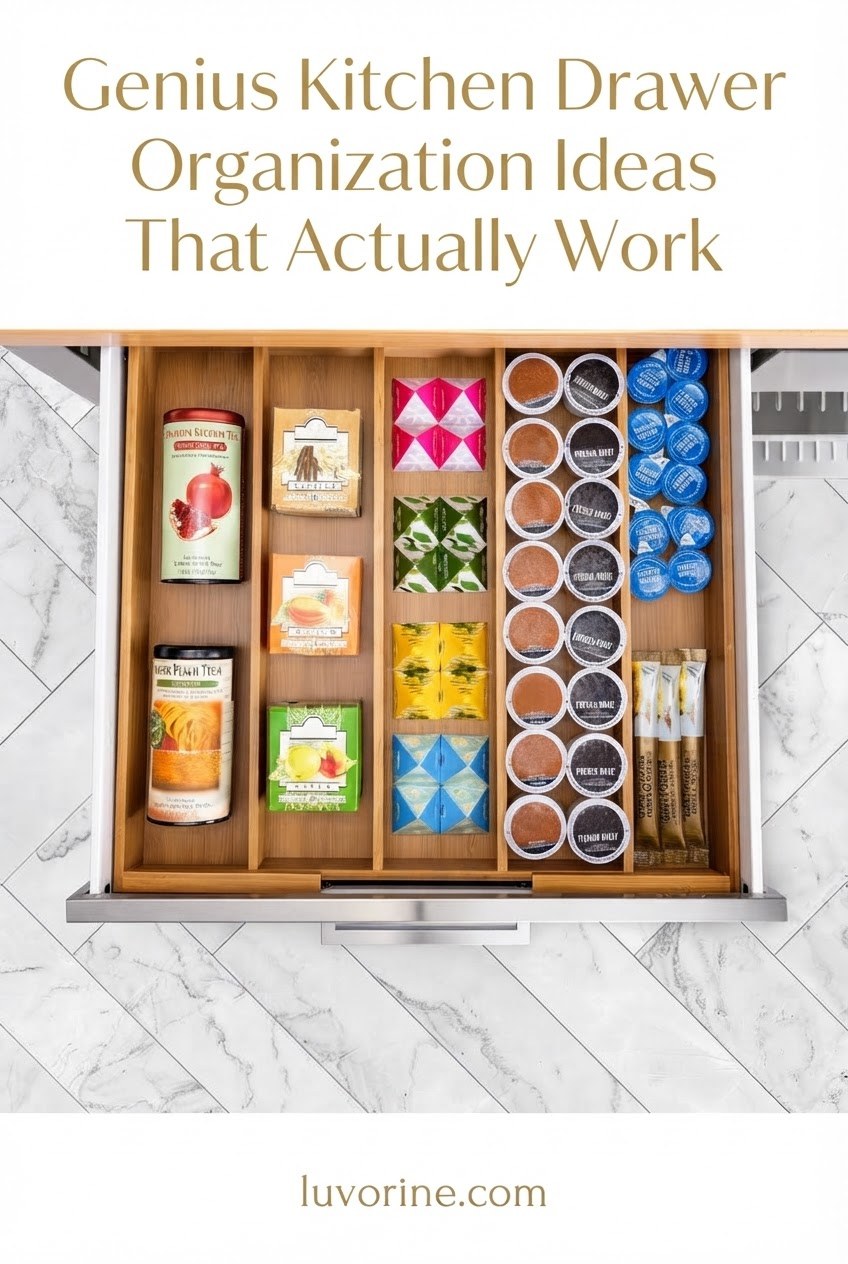
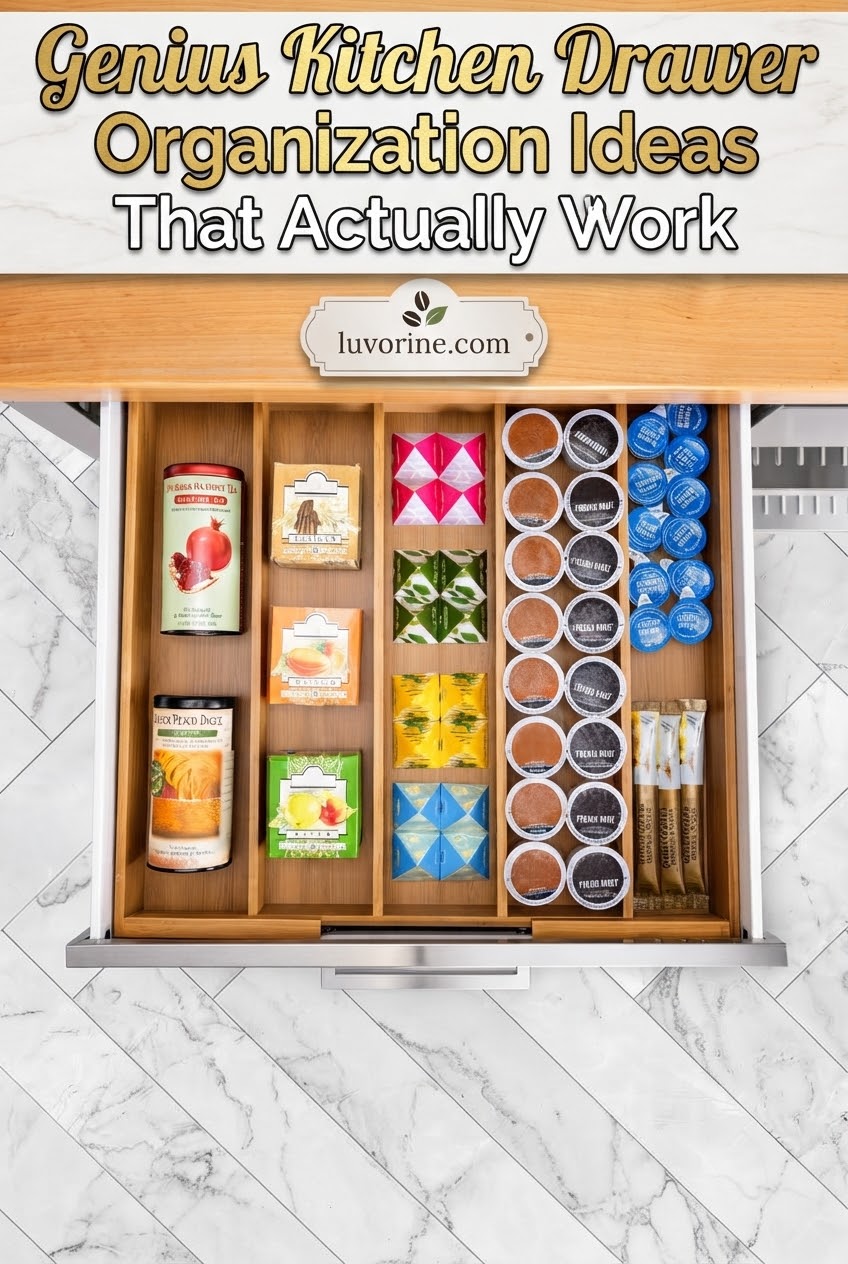
Build a Coffee and Tea Station Drawer
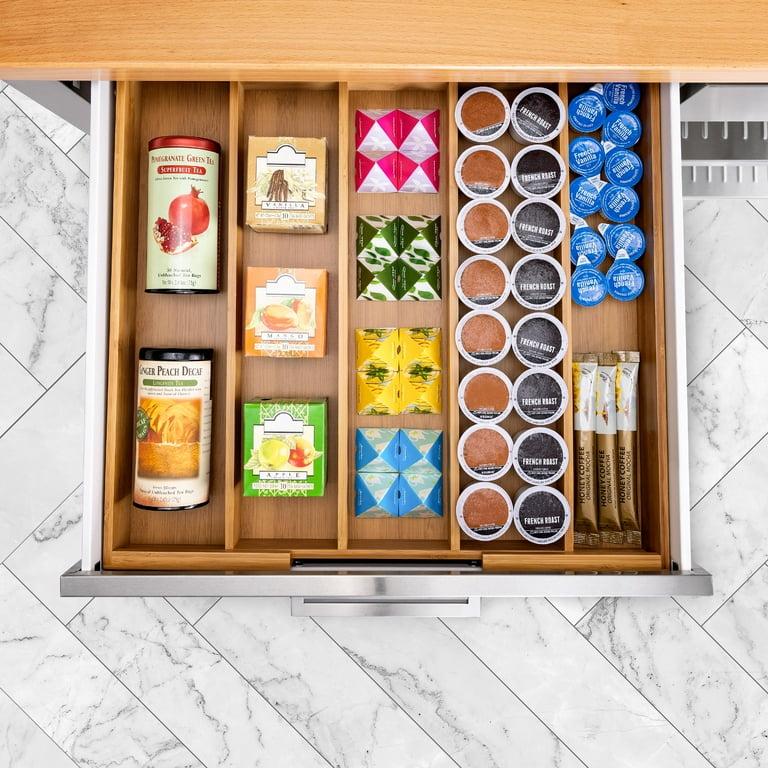
I like a coffee and tea drawer because it puts daily essentials together. Keeping pods, bags, and tools nearby creates a smoother morning routine.
Avoid storing rarely used extras here. The best drawers contain frequently reached items.
Use Vertical Dividers for Cutting Boards and Trays
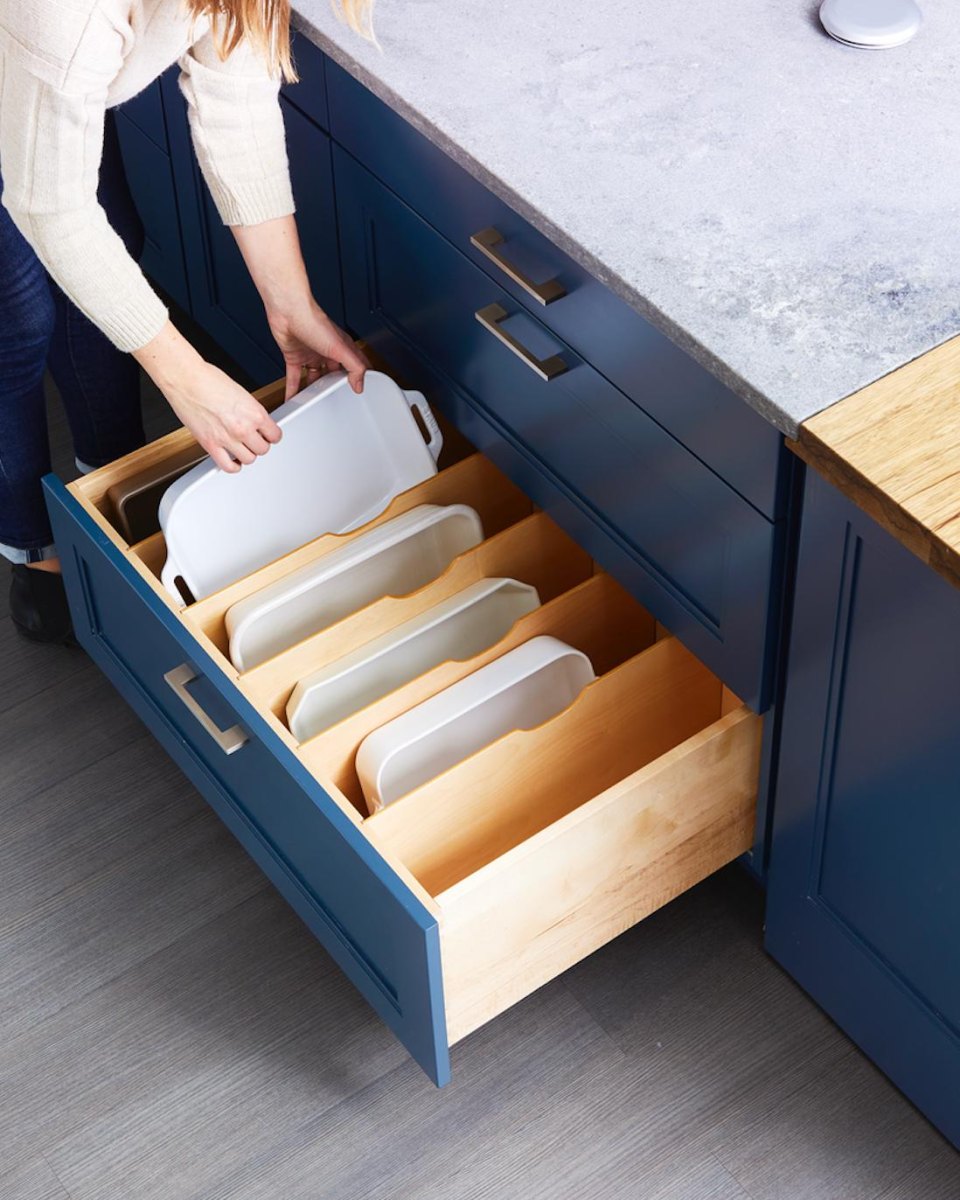
Flat items become frustrating when stacked. Vertical dividers let cutting boards and trays stand upright with easy visibility.
The failure point is weak dividers that cannot handle weight. Choose stable support systems for heavier pieces.
Organize Cleaning Supplies Under the Sink Drawer
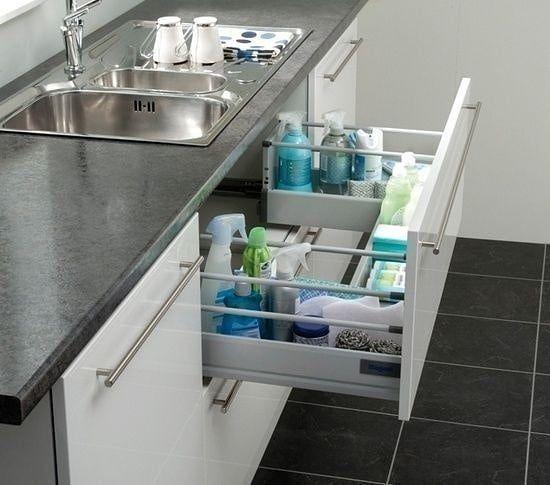
Under-sink storage often becomes wasted space. I prefer grouped bottles and tools because cleaning zones save time.
Keep chemicals organized and follow manufacturer instructions. Safety matters more than perfect-looking storage.
Add Labels for Easy Kitchen Drawer Maintenance
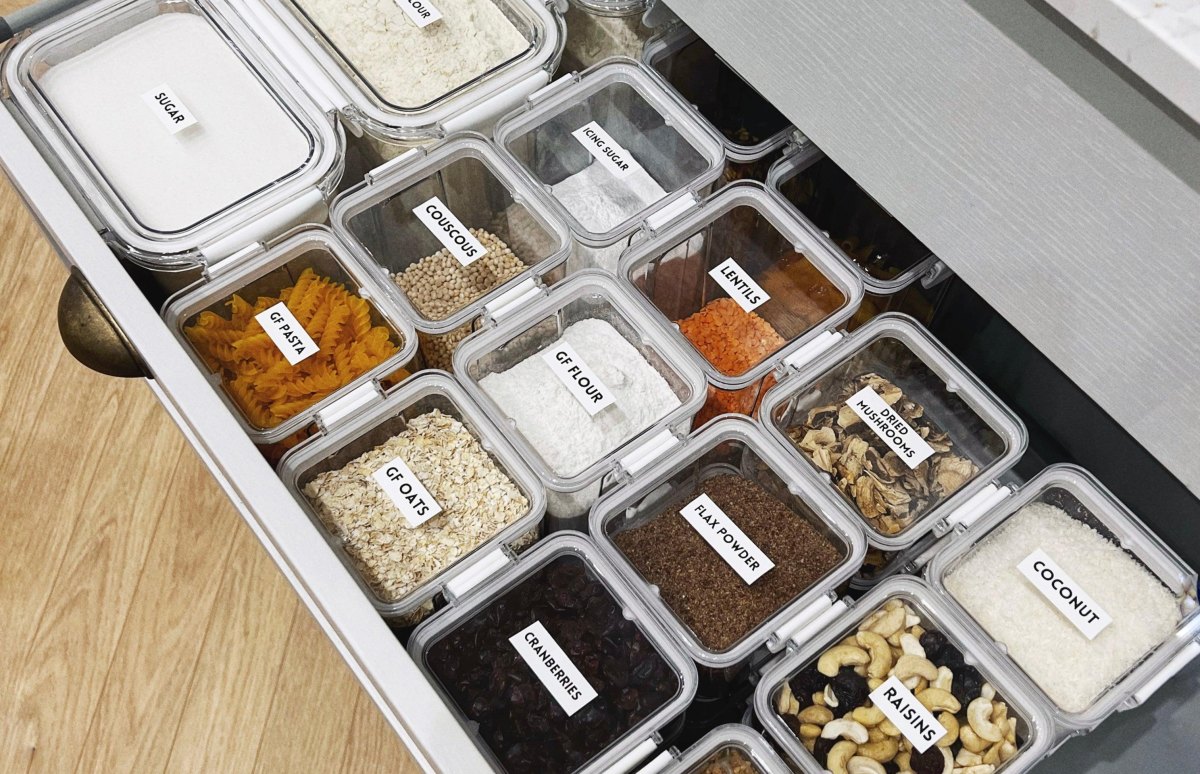
Labels are not just decorative. They create a shared storage language when multiple people use the kitchen.
I avoid labeling every tiny item because maintenance becomes annoying. Label important categories only.
Maximize Corner Drawers with Smart Storage Solutions
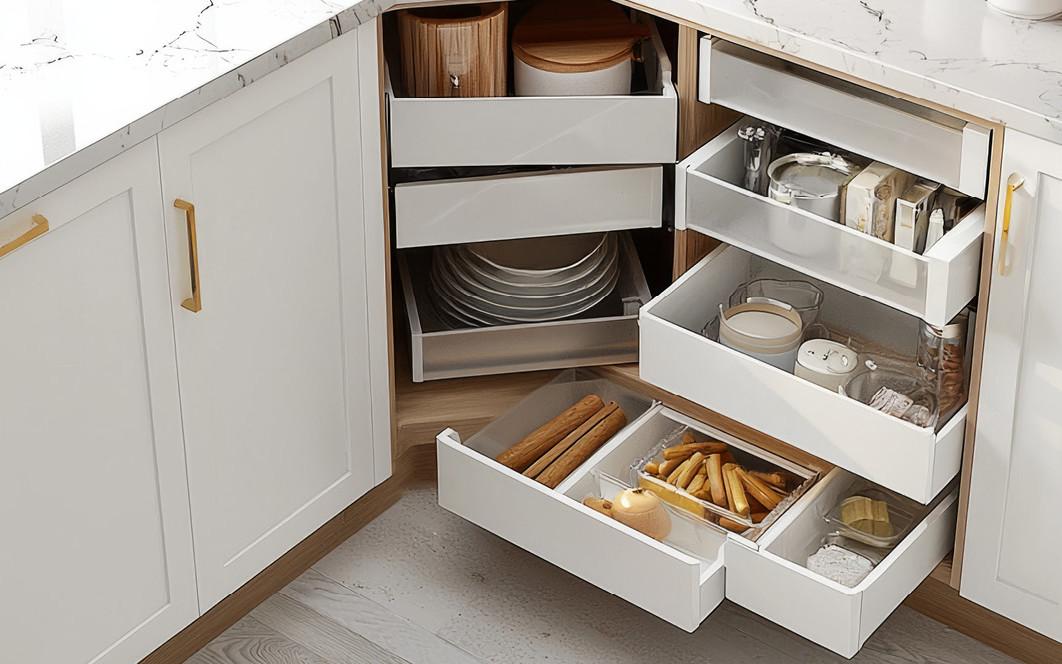
Corner drawers can be awkward, but they are valuable when organized around their shape. I focus on custom-fit storage zones instead of forcing standard trays.
The best solution depends on what you store. Measure carefully and create accessible corner storage that fits your routine.



More Pinterest Visuals